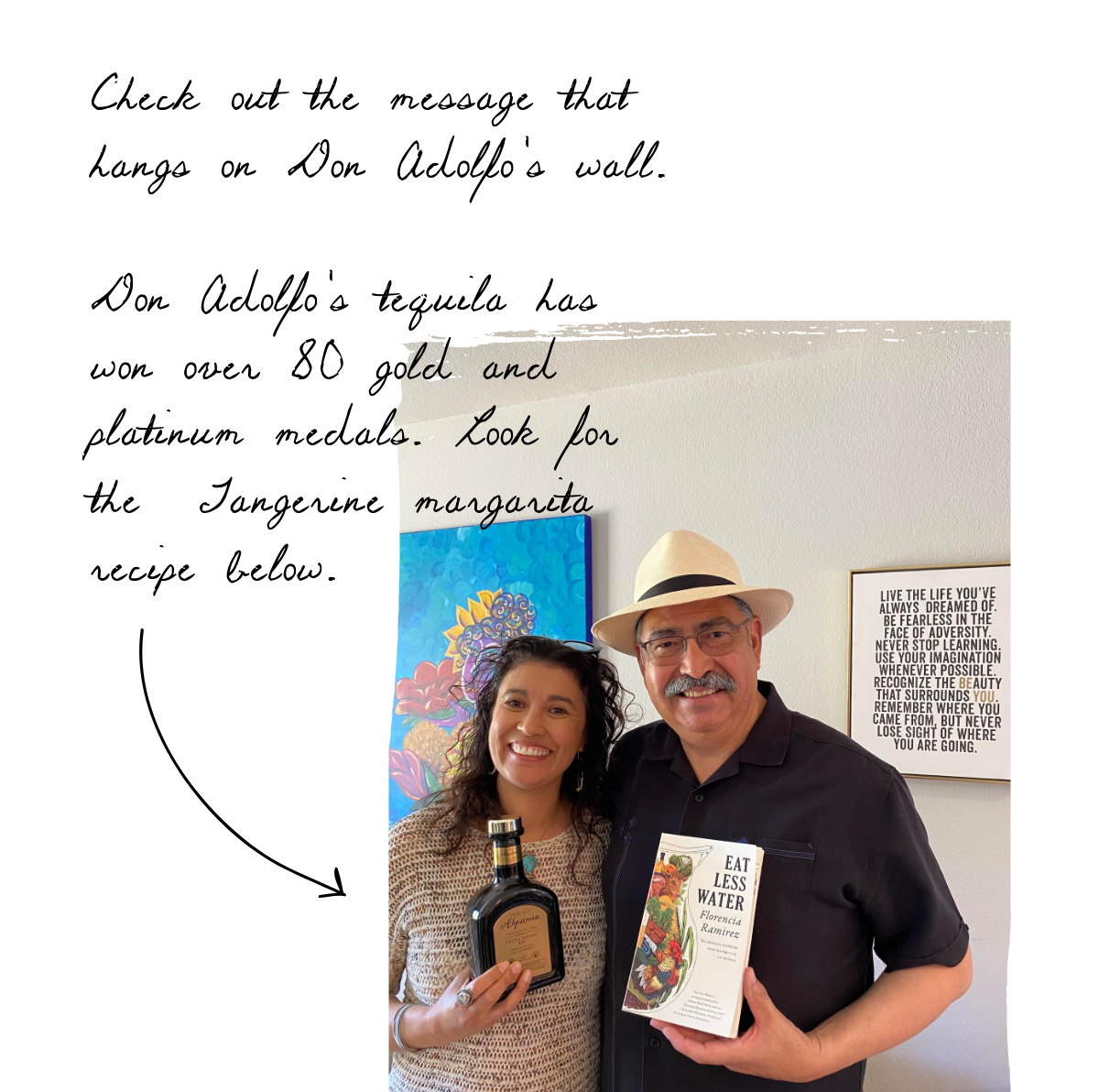

When I asked Don Adolfo why he named his organic tequila Alquimia, his eyes lit up.
“It’s named after my favorite book, The Alchemist,” he said, “a story about listening to your heart, following the signs, and pursuing your ‘personal legend,’ no matter how winding the path.”
Have you read it? Or maybe the better question is, how many times have you read it?
In The Alchemist, the protagonist, the shepherd, sets out to find treasure, only to discover it was at home all along. When I sat down with Don Adolfo (also known as Dr. Adolfo Murillo), he reflected on that theme.
“Following your personal legend is not easy,” he told me. “There are so many tests along the way. But like the shepherd in the story, I left home only to return and find the real treasure was here all along, on the land where I was born.”
That land is now home to his blue agave fields, where he and his family distill Alquimia, an organic tequila made without chemicals and with care for soil, water, and generations to come.
But as we talked, I began to wonder aloud: What if Alquimia isn’t the treasure, but simply an oasis on the journey?
As our conversation deepened, I came to see Don Adolfo’s personal legend not as the bottle itself, but in his work helping farmers across Mexico transition from conventional to organic practices. Under his mentorship, thousands of acres of agave, avocados, and strawberries have been converted to organic. And he does it all for free, asking only that each farmer pay it forward.
Tequila Transparency: What You’re Not Told
Americans drink a lot of tequila, especially on Cinco de Mayo. According to NielsenIQ, tequila sales spike nearly 30% in the week leading up to May 5th, making it one of the highest alcohol sales weeks of the year in the U.S.
And yet, most of us don’t realize what’s in the bottle we’re celebrating with.
Even when a label reads “100% agave,” the Tequila Regulatory Council allows up to 1% of additives, including highly concentrated artificial coloring, glycerin, and synthetic flavorings.
That rich caramel hue in your reposado? It might not come from barrel aging. It could be dye.
“There’s no requirement to list any of it on the label,” Adolfo told me. “We would like these ingredients added to the label. For some people, it won’t make a difference, and that’s fine. But others want the purest product, and currently you can’t do that. There’s no way to know.”
The Hidden Environmental Costs
The problems go deeper than additives. Most industrial tequila production relies on fossil fuels and even chemical fertilizers inside the distillation tanks to accelerate fermentation by a few days.
“The tanks get so hot,” Adolfo explained, “they had to design special sleeves to keep them from exploding.”
Like the old saying goes: time is money, but at whose expense?
In this case, it’s the drinker and the rivers. That “fast-track” process produces a toxic byproduct called vinaza, which is often dumped illegally into waterways. Vinaza is acidic, low in oxygen, and full of heavy metals, fertilizer residues, and other chemical contaminants. It devastates aquatic ecosystems.
Adolfo takes a different path. He lets fermentation move at its natural rhythm. And instead of dumping vinaza, he’s devised a method to transform it into nutrient-rich compost.
Waste becomes nourishment. It’s a closed loop, a healing cycle.

This Cinco de Mayo: Drink With Intention
This Cinco de Mayo:
- Ask for organic tequila—even if your local bar doesn’t carry it yet. The more of us who ask, the more likely bartenders are to start requesting better bottles behind the bar.
- Skip the neon mixers packed with food additives and high corn fructose syrup. Try this fresh, no-hangover version of a margarita because there are no chemicals, heavy metals, additives only real citrus and clean ingredients.
Tangerine Margarita (Fresh + Clean)
- 1 shot of tangerine juice (or grapefruit, orange, lemon)
- 1 shot of fresh lime juice
- ½ shot of organic agave syrup
- ½ shot of water
- 1 shot of organic blanco tequila (light and bright—perfect for citrus)
Shake with ice (or stir with a wooden spoon in a pitcher). No shaker? Use a travel coffee mug, seriously, it works. Skip the salt rim. When the ingredients are clean, the flavor speaks for itself.
Want to Go Deeper?
- Watch my full interview with Don Adolfo, recorded in his kitchen in Oxnard, California. His story is a powerful reminder that food, farming, and purpose can transform a life—and a land.
Tequila Alquimia is also the featured farm in the Tequila & Water chapter of Eat Less Water. Get the book here.
Drink with purpose. Cook with joy. Live your personal legend.
click to Read & Leave a comment
Click to close comments
Comments